Reading with ms. Kristy, LLC now enrolling for Mid-Fall Semester Reserve your spot


Phonological Awareness
& Phonemic Awareness
Phonological awareness & phonemic awareness
Two of the most important and most misunderstood skills in your child's reading journey. Here's what they mean, why they matter, and how you can build them at home.
Frequently asked questions
WHAT IS PHONOLOGICAL AWARENESS?
It all starts with sound
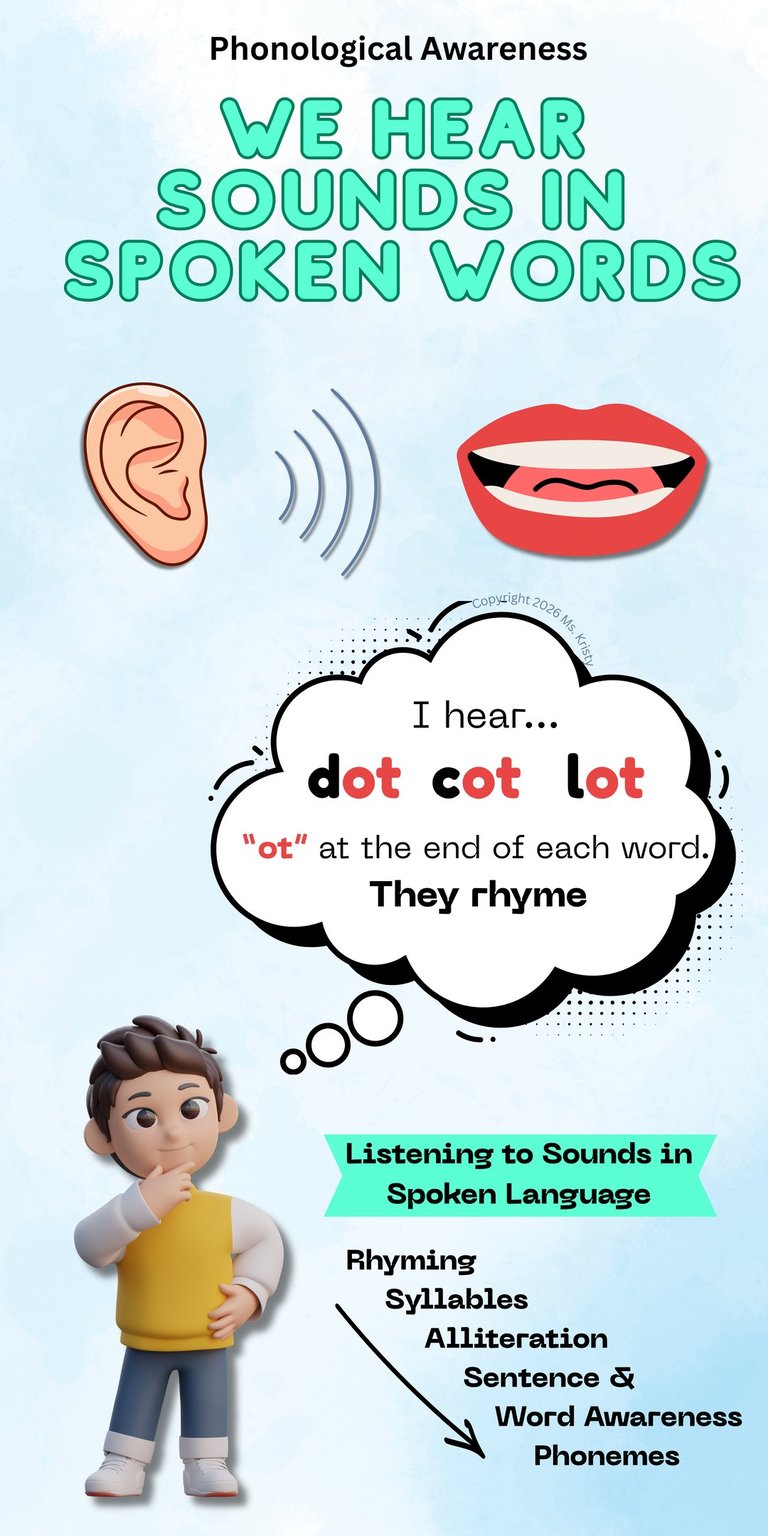
Phonological awareness is the ability to hear and play with the sound structure of spoken language. Notice that word: spoken. This skill has nothing to do with letters or a page; it is entirely about what a child can do with their ears.
It includes the ability to recognize rhymes, clap out syllables, hear the beginning sound of a word, and break words into their smaller sound parts. Think of it as your child's "sound radar" (the ability to tune in to how language sounds, not just what it means).
Research consistently shows that phonological awareness is one of the most reliable predictors of a child's future reading success. Children who struggle with these skills, even before they ever pick up a book are far more likely to have difficulty learning to read.
Note to add on your page: This is a developmental range, not a strict cutoff. Every child grows at their own pace. If you have concerns, a certified literacy tutor can help you identify where your child is and what comes next.
PHONEMIC AWARENESS: A CLOSER LOOK
The most advanced piece of the puzzle
Phonemic awareness is a specific part of phonological awareness and the most important one for learning to read.
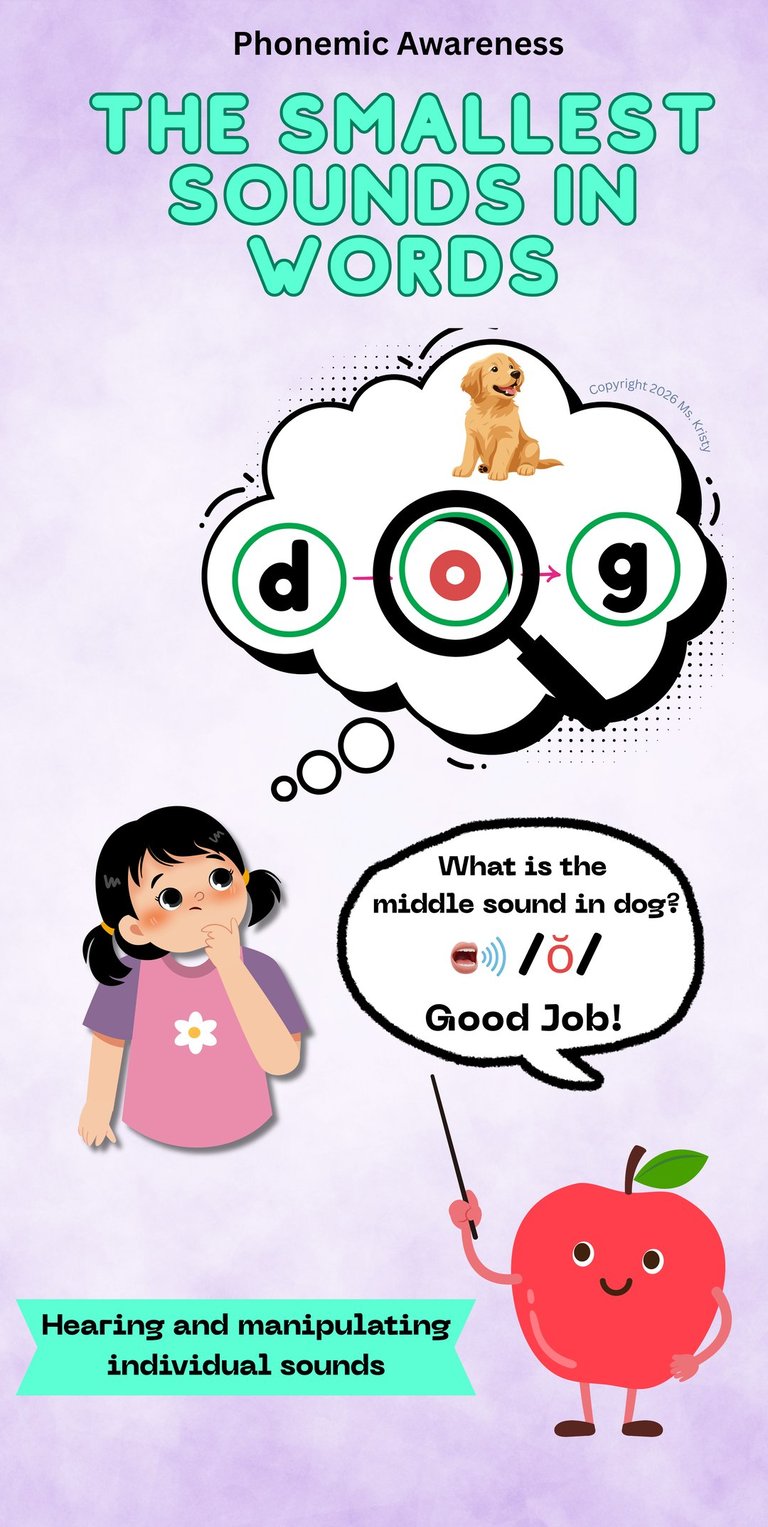
While phonological awareness covers the big picture (syllables, rhymes, word chunks), phonemic awareness zooms all the way in to the smallest unit of sound: the phoneme. A phoneme is a single sound. The word "cat," for example, has three phonemes: /k/ /a/ /t/.
A child with strong phonemic awareness can:
Hear that "cat" and "cup" start with the same sound
Break the word "ship" into three separate sounds: /sh/ /i/ /p/
Blend the sounds /d/ /o/ /g/ together to say "dog"
Change the /b/ in "bat" to /s/ and know the new word is "sat"
Strong phonemic awareness is one of the strongest predictors of later reading success. Children who struggle with reading — including many children with dyslexia — often have difficulty at this level specifically.
HOW IS THIS DIFFERENT FROM PHONICS?
A question parents ask all the time
Phonological awareness, phonemic awareness, and phonics are all connected, but they are not the same thing, and understanding the difference helps you support your child more effectively.
Here is the simplest way to think about it:
Phonological awareness → ears only. No letters. No page. Just listening and speaking. ("Do 'cat' and 'hat' rhyme?")
Phonemic awareness → also ears only. No letters. But zoomed in to the tiniest sounds. ("What sounds do you hear in 'cat'? /k/ /a/ /t/" OR "What is the beginning sound in 'cat'? /k/ /a/ /t/"?)
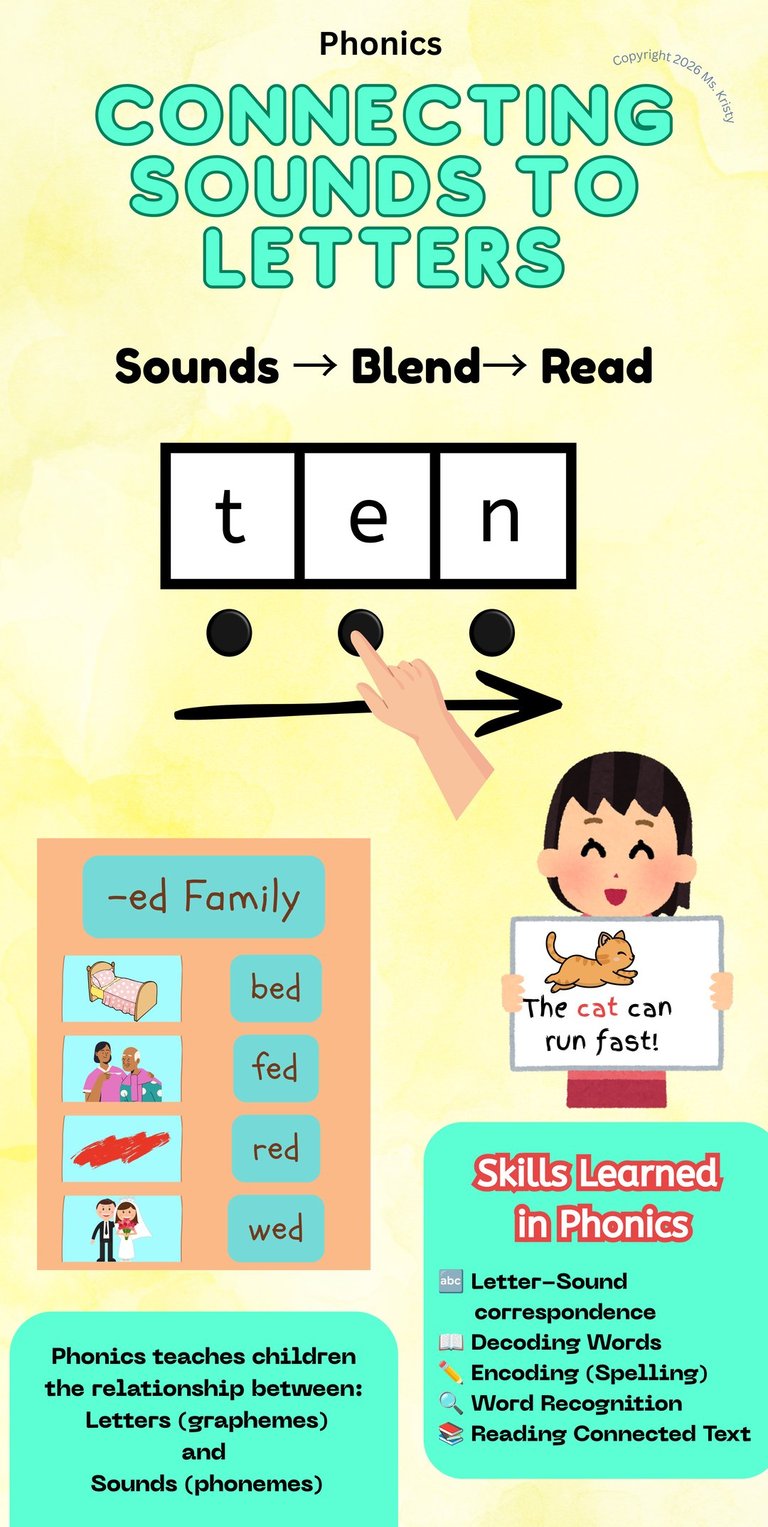
Phonics → now we bring in print. Phonics is when a child connects those sounds to the letters on a page. ("The letter C makes the /k/ sound.")
A child must be able to hear and manipulate sounds before they can reliably connect them to letters. That is why phonological and phonemic awareness come first in the reading sequence; they build the foundation that phonics instruction builds on.
A child can know every letter name and sound and still struggle to blend them into a real word because that blending is a phonemic awareness skill, not a phonics skill.
Skills & Milestones
Step 1 | Rhyming
Recognizing and producing words that end in the same sound.
Example: "Do 'cat' and 'hat' rhyme?" / "What rhymes with 'dog'?"
Ages: 3 to 4
The phonological awareness continuum
These skills develop in a predictable order, from the easiest (biggest sound chunks) to the most advanced (individual phonemes). Think of it like a staircase — each step builds on the one before it.
Step 2 | Alliteration
Noticing when words start with the same sound.
Example: "Peanut and pasta start with the same sound!"
Ages: 3 to 4
Step 3 | Syllable awareness
Breaking words into beats or chunks.
Example: Clapping out but-ter-fly (3 claps).
Ages: 4 to 5
Step 4 | Onset-rime
Ages 4 to 5
Separating the first sound of a word from the rest.
Example: /b/ + /at/ = "bat"
Step 5 | Phoneme isolation
Identifying the first, last, or middle sound in a word.
Example: "What is the first sound in 'sun'?" → /s/
Ages: 5 to 6
Ages: 5 to 6
Step 6 | Phoneme blending & segmenting
Blending separate sounds into a word, or breaking a word into all its individual sounds.
Example: /d/ /o/ /g/ → "dog" / "dog" → /d/ /o/ /g/
Ages: 6 to 7
Step 7 | Phoneme manipulation
Adding, deleting, or substituting sounds to make new words.
Example: "Say 'cat.' Now change the /k/ to /b/. What's the new word?" → "bat"


Activities
Easy ways to build these skills at home
You do not need worksheets or flashcards. The most powerful phonological awareness activities are oral, playful, and can happen anywhere.
Rhyme together every day
Nursery rhymes, silly songs, and rhyming books are some of the most powerful early literacy tools available. When you read a rhyming book, pause before the rhyming word and let your child fill it in. These are not "just" fun — they are building a critical skill.
Clap out syllables
Pick a word — any word — and clap once for each syllable. Names are great for this. "Ma-li-a" (3 claps). "Dad" (1 clap). Kids love doing this with silly long words.
Play "I Spy" with sounds
Instead of colors, use beginning sounds: "I spy something that starts with the /s/ sound." This builds phoneme isolation without a single worksheet.
Practice blending in the car
Say a word slowly, one sound at a time: "/d/... /o/... /g/... What's the word?" Start with short two- or three-sound words and build from there. This is a great car ride game.
Sing and substitute sounds
Take a familiar song and swap out beginning sounds. Change "Happy Birthday" to "Bappy Birpday" and ask what sounds you changed. Silly sound play builds phonemic awareness naturally.
Stretch words out like taffy
When you say a word, stretch it out so each sound is clear: "mmmm-aaaa-p." Have your child try it with you. This is the foundation of segmenting — a skill directly tied to spelling later on.
SOURCES
This page is based in peer-reviewed research, Sciene of Reading methods, and trusted literacy resources, including:
National Reading Panel (2000). Teaching Children to Read: An Evidence-Based Assessment of the Scientific Research Literature on Reading and Its Implications for Reading Instruction. National Institute of Child Health and Human Development. — The landmark federal report that established phonmic awareness as one of the five essential components of reading instruction.
Adams, M.J. (1990). Beginning to Read: Thinking and Learning about Print. MIT Press. — Foundational research establishing phonological and phonemic awareness as strong predictors of early reading achievement.
Reading Rockets — Phonological and Phonemic Awareness (readingrockets.org) — Comprehensive research-backed definitions, skill progressions, and parent activities. Funded by the U.S. Department of Education.
Moats, L.C. & Tolman, C. (2009). Language Essentials for Teachers of Reading and Spelling (LETRS). Voyager Sopris Learning. — Professional framework for understanding the distinction between phonological awareness and phonics.
NAEYC (National Association for the Education of Young Children) — Word Play Throughout the Day: Phonological Awareness in the Preschool Classroom. — Research-based guidance on developmentally appropriate phonological awareness instruction.
NWEA / Teach.Learn.Grow. (2026). Phonological Awareness vs. Phonemic Awareness. — Practical classroom-based explanation of the distinction between the two skills.
Contact
Questions? Reach out anytime!
readingwithmskristy@gmail.com
© 2026 All rights reserved.